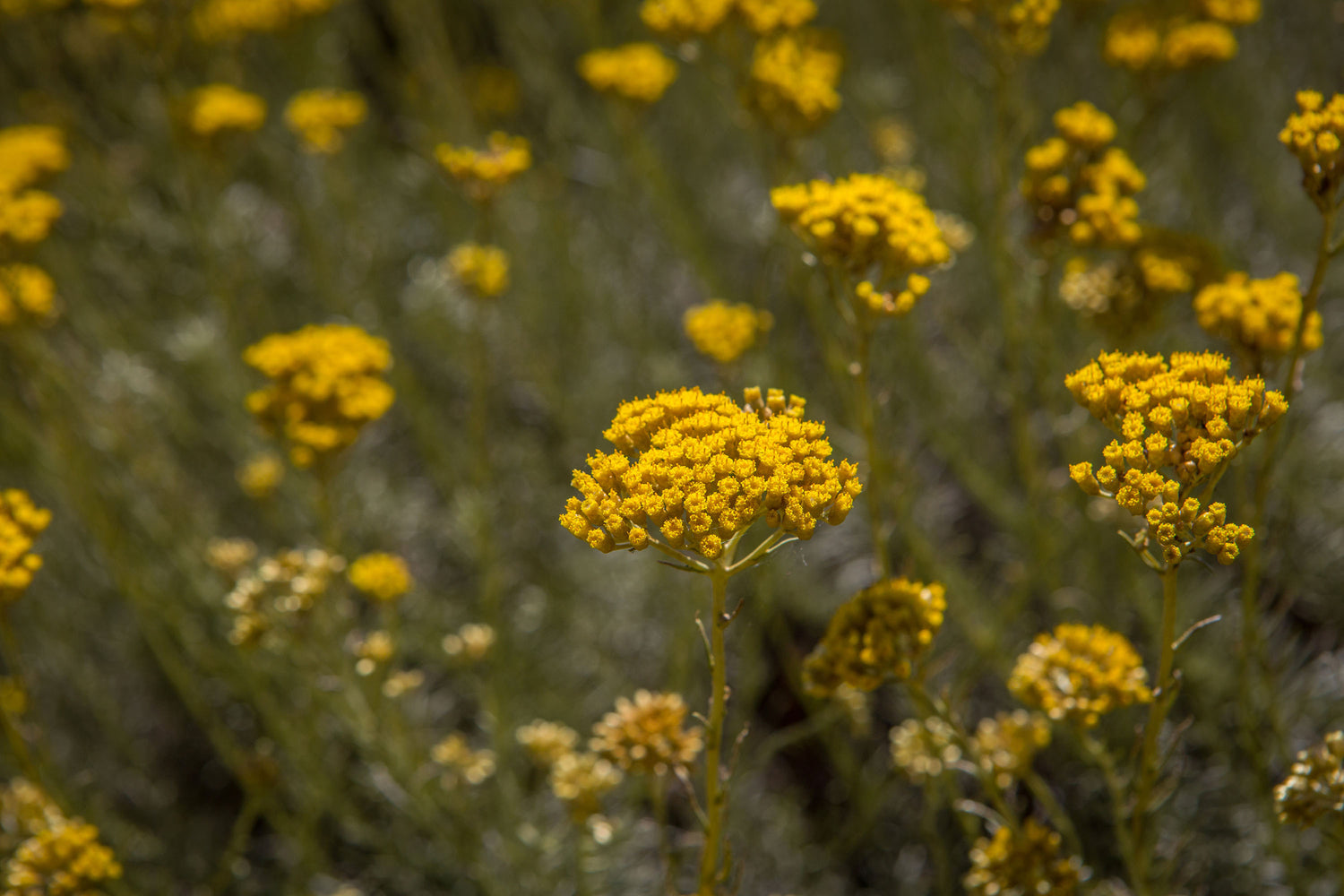
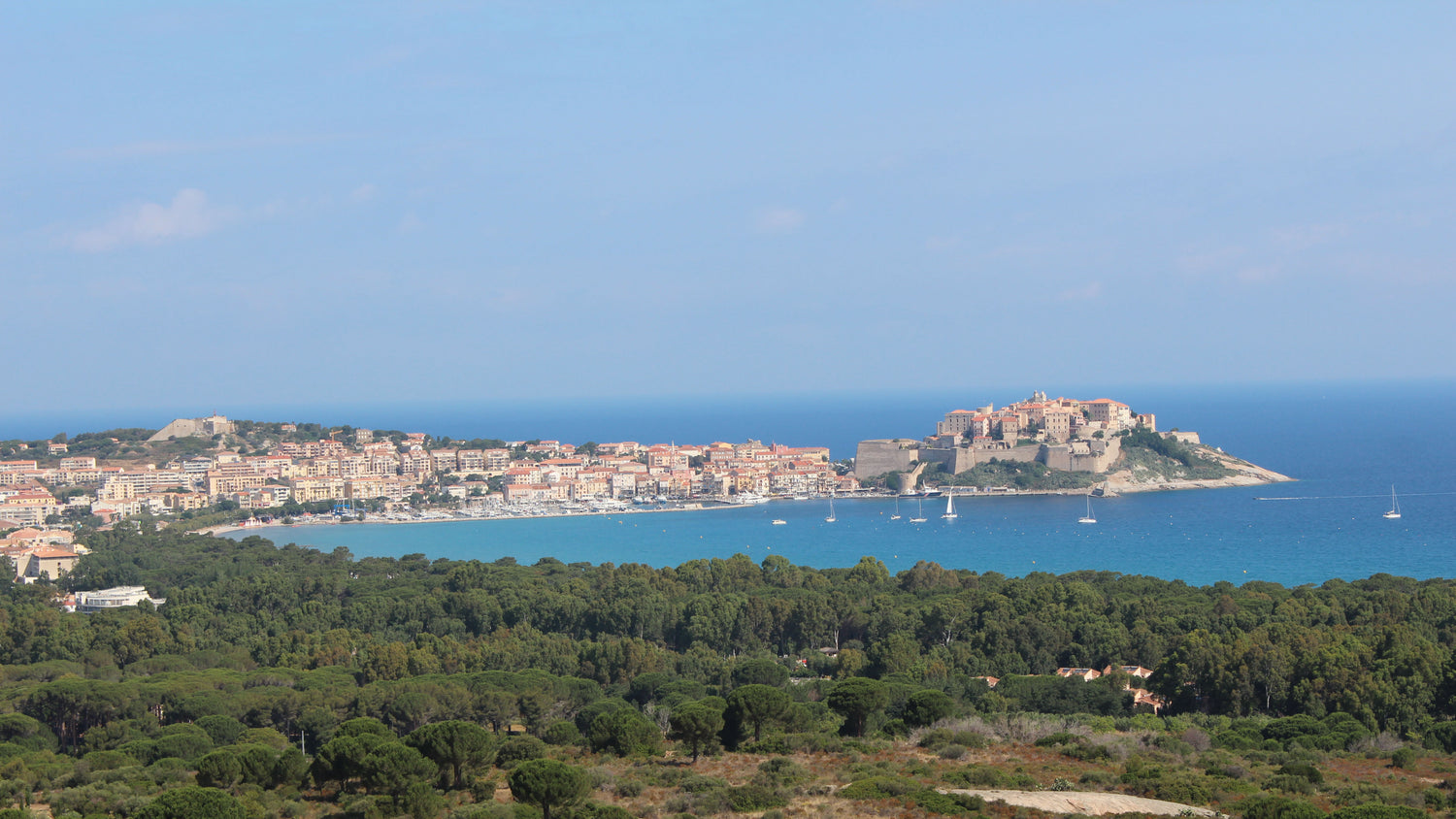
When people say "lavender", they think of the fields of Provence. In Corsica, the lavender you meet in the maquis is different: it is butterfly lavender, also called French or Spanish lavender. Here is how to recognise it.

Flowers topped with wings
Butterfly lavender, Lavandula stoechas, has short, stocky, dark purple spikes. At the top of each spike stand a few paler purple bracts that look like butterfly wings: hence its name.
Its foliage is fine and grey-green. It flowers in spring, well before the lavender of Provence.
A lavender of its own
- True lavender (Lavandula angustifolia) and lavandin have long, thin spikes, with no "wings". They are mostly grown in Provence.
- Butterfly lavender grows wild in the maquis, on the dry, acidic soils around the Mediterranean.
Its scent is different too: more camphor-like and resinous, less sweet than true lavender.
Butterfly lavender in our products
- Organic butterfly lavender essential oil, 5 ml.
- Butterfly lavender floral water, 100 ml, to mist with eyes closed on the face and sensitive areas.
- Butterfly lavender soap, 100 g, enriched with Immortelle oil.
Using butterfly lavender essential oil well
An essential oil is pure and highly concentrated: never apply it undiluted to the skin. Dilute 1 to 2 drops in a teaspoon of vegetable oil, such as our Immortelle oil, before applying to the chosen area. Do a skin test in the crook of the elbow 48 hours before first use. It can also be used in a diffuser: a few drops, in a well-ventilated room, away from children.
Label precautions: for external use only, avoid contact with eyes, keep out of reach of children, stop using if irritation occurs. All our guidance is gathered in our precautions for use.
Frequently asked questions
Can I use butterfly lavender instead of true lavender?
No, they are not the same essential oils: their composition and scent differ. Follow the directions for each bottle.
How do I use the floral water?
Close your eyes and mist it onto the face and sensitive areas as often as you like. Let it absorb, without wiping it off.
To discover the other plants of the maquis: The plants of the Corsican maquis.